From ‘Atoms for Peace’ to Witkoff: A history of Iran’s nuke program, and efforts to stop it

Posted April 15, 2025 by davidking1530
Categories: Uncategorized

Tags: , , , ,

As the Trump Administration attempts, again, to thwart Iran’s decades-long effort to attain nuclear weapons, a look at key dates in the long-simmering conflict

13 April 2025

https://www.timesofisrael.com/long-fraught-timeline-of-us-iran-tensions-as-nuclear-negotiators-meet/
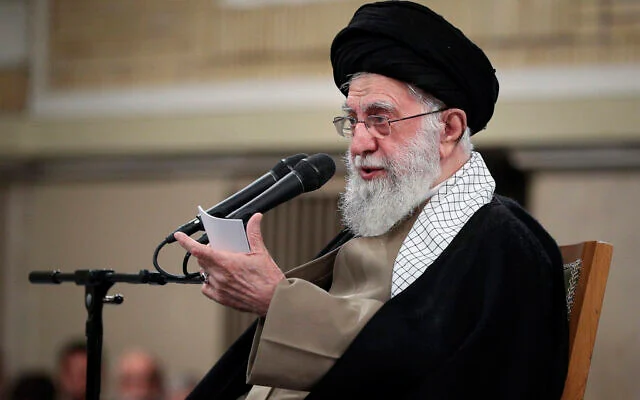
Iran and the United States held talks in the sultanate of Oman on Saturday, jump-starting negotiations over Tehran’s rapidly advancing nuclear program.

Iran’s state-run broadcaster said US Mideast envoy Steve Witkoff and Iran’s Foreign Minister Abbas Araghchi “briefly spoke” together — the first time the two nations have done that since the Obama administration.

Araghchi said more talks are planned for April 17.

The talks represent a milestone in the fraught relations between the two nations over Iran’s program, which is enriching uranium close to weapons-grade levels.

Here’s a timeline of the tensions between the two countries over Iran’s atomic program.

Early days

1967 — Iran takes possession of its Tehran Research Reactor under America’s “Atoms for Peace” program.

1979 — Shah Mohammad Reza Pahlavi, fatally ill, flees Iran as popular protests against him surge. Ayatollah Ruhollah Khomeini returns to Tehran and the Islamic Revolution sweeps him to power. Students seize the United States Embassy in Tehran, beginning the 444-day hostage crisis. Iran’s nuclear program goes fallow under international pressure.

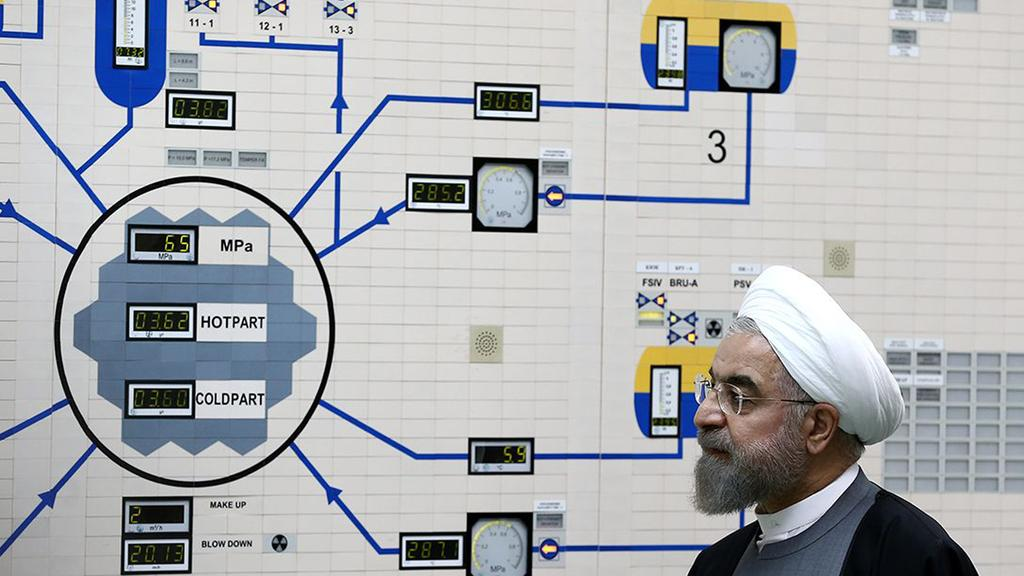
August 2002 — Western intelligence services and an Iranian opposition group reveal Iran’s secret Natanz nuclear enrichment facility.

June 2003 — Britain, France and Germany engage Iran in nuclear negotiations.

October 2003 — Iran suspends uranium enrichment.

February 2006 — Iran announces it will restart uranium enrichment following the election of hard-line president Mahmoud Ahmadinejad. Britain, France and Germany walk out of stalled negotiations.

June 2009 — Iran’s disputed presidential election sees Ahmadinejad re-elected despite fraud allegations, sparking Green Movement protests and a violent government crackdown.

October 2009 — Under President Barack Obama, the US and Iran open a secret backchannel for messages in the sultanate of Oman.

July 2012 — US and Iranian officials hold face-to-face secret talks in Oman.

July 14, 2015 — World powers and Iran announce a long-term, comprehensive nuclear agreement that limits Tehran’s enrichment of uranium in exchange for the lifting of economic sanctions.

The nuclear deal collapses

May 2018 — Trump unilaterally withdraws the US from the nuclear agreement, calling it the “worst deal ever.” He says he’ll get better terms in new negotiations to stop Iran’s missile development and support for regional militias. Those talks don’t happen in his first term.

May 8, 2019 — Iran announces it will begin backing away from the accord. A series of regional attacks on land and at sea blamed on Tehran follow.

Jan. 3, 2020 — A US drone strike in Baghdad kills Gen. Qassem Soleimani, the architect of Tehran’s proxy wars in the Middle East.

Jan. 8, 2020 — In retaliation for Soleimani’s killing, Iran launches a barrage of missiles at military bases in Iraq that are home to thousands of American and Iraqi troops. More than 100 US service members suffer traumatic brain injuries. As Iran braces for a counterattack, the Revolutionary Guard shoots down a Ukrainian passenger plane shortly after takeoff from Tehran’s international airport, reportedly mistaking it for a US cruise missile. All 176 people on board are killed.

July 2020 — A mysterious explosion tears apart a centrifuge production plant at Iran’s Natanz nuclear enrichment facility. Iran blames the attack on Israel.

April 6, 2021 — Iran and the US under President Joe Biden begin indirect negotiations in Vienna over how to restore the nuclear deal. Those talks, and others between Tehran and European nations, fail to reach any agreement.

April 11, 2021 — A second attack within a year targets Iran’s Natanz nuclear site, again likely carried out by Israel.

April 16, 2021 — Iran begins enriching uranium up to 60% — its highest purity ever and a technical step from weapons-grade levels of 90%.

Feb. 24, 2022 – Russia launches its full-scale invasion of Ukraine. Moscow ultimately will come to rely on Iranian bomb-carrying drones in the conflict, as well as missiles.

July 17, 2022 — An adviser to Iran’s supreme leader, Kamal Kharrazi, says that Iran is technically capable of making a nuclear bomb, but has not decided whether to build one. His remarks will be repeated by others in the coming years as tensions grow.

Mideast wars rage

Oct. 7, 2023 — Hamas terrorists from the Gaza Strip storm into Israel, killing some 1,200 people and taking 251 others hostage. This begins the most intense war ever between Israel and Hamas. Iran, which has armed Hamas, offers support to the group. Regional tensions spike.

Oct. 8, 2023 — Iranian proxy Hezbollah begins near-daily rocket and drone attacks on Israel in support of Hamas, which will continue for the next 13 months.

Nov. 19, 2023 — Yemen’s Houthi rebels, long supported by Iran, seize the ship Galaxy Leader, beginning a monthslong campaign of attacks on shipping through the Red Sea corridor that the US Navy describes as the most intense combat it has seen since World War II. The attacks mirror tactics earlier used by Iran.

April 14, 2024 — Iran launches an unprecedented direct attack on Israel, firing over 300 missiles and attack drones. Israel, working with a US-led international coalition, intercepts much of the incoming fire.

April 19, 2024 — A suspected Israeli strike hits an air defense system by an airport in Isfahan, Iran.

July 31, 2024 – Ismail Haniyeh, a Hamas leader, is assassinated by Israel during a visit to Tehran after the inauguration of reformist President Masoud Pezeshkian.

Sept. 27, 2024 — After massively ramping up the war against Hezbollah, an Israeli airstrike kills its leader Hassan Nasrallah.

Oct. 1, 2024 — Iran launches its second direct attack on Israel, though a US-led coalition and Israel shoot down most of the missiles.

Oct. 16, 2024 — Israel kills Hamas leader Yahya Sinwar in the Gaza Strip.

Oct. 26, 2024 — Israel openly attacks Iran for the first time in response to the Oct. 1 missile attack, striking air defense systems and sites associated with its missile program.

Trump returns — and reaches out

Jan. 20, 2025 — Trump is inaugurated for his second term as president.

Feb. 7, 2025 – Iran’s Supreme Leader Ayatollah Ali Khamenei says proposed talks with the US are “not intelligent, wise or honorable.”

March 7, 2025 – Trump says he sent a letter to Khamenei seeking a new nuclear deal with Tehran.

March 15, 2025 — Trump launches intense airstrikes targeting Houthi rebels in Yemen, the last members of Iran’s self-described “Axis of Resistance” capable of daily attacks.

April 7, 2025 — Trump announces the US and Iran will hold direct talks in Oman. Iran says they’ll be indirect talks, but confirms the meeting.

April 12, 2025 — First round of talks between Iran and the US take place in Oman, ending with a promise to hold more talks after US Mideast envoy Steve Witkoff and Iranian Foreign Minister Abbas Araghchi “briefly spoke” together — the first time the two nations have done that since the Obama administration.

April 19, 2025 — Next round of talks scheduled between the US and Iran.
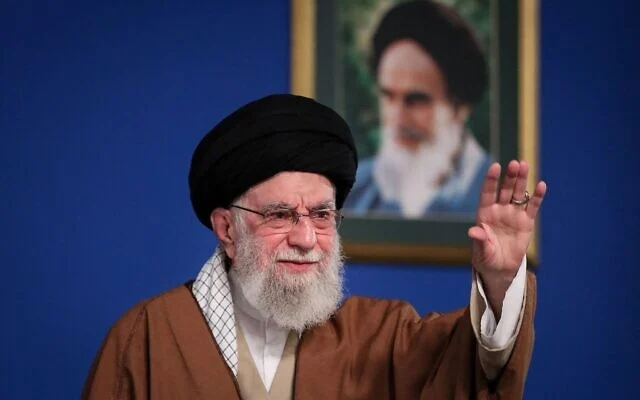
Top Iranian officials told Khamenei to allow US nuke talks or risk fall of regime – NYT

Posted April 14, 2025 by davidking1530
Categories: Uncategorized

Tags: , , , ,

In rare coordinated effort, officials said to have warned Iran’s supreme leader that military threats from US and Israel are real, and country faces massive unrest if it goes to war

11 April 2025

https://www.timesofisrael.com/top-iranian-officials-warned-khamenei-regime-in-danger-without-nuclear-talks-nyt/

In a rare intervention, Iran’s Supreme Leader Ayatollah Ali Khamenei was urged by his top officials to allow negotiations with the United States on the regime’s nuclear program or risk the fall of the Islamic Republic, The New York Times reported Friday.

The US and Iran are set to meet in Oman on Saturday for talks over Tehran’s rogue nuclear program.

According to The New York Times report, which cited two senior Iranian officials who are familiar with the details, Khamenei held a meeting last month attended by heads of the judiciary and parliament. Those officials, in what the sources described as an unusual, coordinated effort, pressured Khamenei into accepting talks with Washington, even direct ones.

They told Khamenei that the threat of military action by the US and Israel against its nuclear sites was serious.

“If Iran refused talks or if the negotiations failed, the officials told Mr. Khamenei, military strikes on Iran’s two main nuclear sites, Natanz and Fordow, would be inevitable,” the sources said, as reported by the Times.

The country, already in economic shambles, would be forced to respond, but then would also likely be plunged into domestic unrest if it were to go to war, they said.

The combination of such events would amount to an existential threat to the Islamic Republic, the officials reportedly told Khamenei.

The sources said that Mohammad Bagher Ghalibaf, an ex-Islamic Revolutionary Guards Corps chief and current conservative head of Parliament, told Khamenei that a war combined with a domestic economic implosion could quickly get out of control.

They also quoted President Masoud Pezeshkian as telling Khamenei that managing the country through its current crises was not tenable. The report points to power cuts that threaten to shutter factories and water shortages in the central city of Yazd, which saw schools and government offices closed this week.

Iran previously rejected talks but has since relented amid US President Donald Trump’s threats.

Hossein Mousavian, a former diplomat who served on Iran’s nuclear negotiating team on a 2015 deal and is now a visiting fellow at Princeton University, told The New York Times that the change illustrated that preserving the regime was Khamenei’s main priority.

“Mr. Khamenei’s turnaround demonstrates his long-held core principle that ‘preserving the regime is the most necessary of the necessities,’” Mousavian said.

While Khamenei relented and agreed to talks, he also imposed his own conditions, the report said.

Citing three Iranian officials, the NYT said that Khamenei agreed to discuss strict monitoring for the nuclear program and a significant reduction of the enrichment of uranium. However, he has said that Iran’s missile program is off limits, regarding it as being part of Iran’s defenses. The sources said that was a “deal breaker.”

However, the report also said that Iran was “open to discussing its regional policies” and support for its terror proxies like Hamas, Hezbollah and the Houthis in Yemen.

Hamas and Hezbollah have been severely weakened by Israel in the conflicts since Hamas’s Oct. 7 2023 assault on southern Israel, and the US is currently carrying out massive strikes on the Houthis.

The US has vowed not to allow Iran to obtain a nuclear weapon, and Trump has repeatedly threatened “bombing” and a “very bad day for Iran” if no agreement is reached to prevent it.

Iran, which is sworn to Israel’s destruction, denies seeking a nuclear weapon, but it has ramped up its enrichment of uranium to 60 percent purity, which has no application beyond nuclear weapons, and has obstructed international inspectors from checking its nuclear facilities.

Iranian officials said Friday that the Islamic Republic is giving the talks “a genuine chance,” and that, if there are not further “threats and intimidation from the American side, there is a good possibility of reaching an accord.”

The talks on Saturday will be led by Foreign Minister Abbas Araghchi and US special envoy Steve Witkoff, with Omani Foreign Minister Badr al-Busaidi as intermediary, according to Iranian state media.

Trump has characterized the talks as “direct,” while Iranian officials have insisted they will be “indirect.”

Khamenei adviser Ali Shamkhani said in a post to X on Friday that Araghchi was heading to Oman “with full authority for indirect negotiations with America.”

“Tehran seeks a real, just deal—away from media show and rhetoric. Key proposals are ready. If Washington shows determination for a deal, the path to agreement will be clear,” he wrote, in a message posted separately in Farsi, English, Arabic, Russian, and Hebrew.

The Iranian foreign ministry said on Friday the US should value the Islamic Republic’s decision to engage in talks despite what it called Washington’s “prevailing confrontational hoopla.”

The ministry’s spokesman, Esmaeil Baqaei, said Iran was “giving diplomacy a genuine chance in good faith and full vigilance,” adding, “America should appreciate this decision, which was made despite their hostile rhetoric.”

In the lead-up to the talks, Trump reiterated his warning that military action was “absolutely” possible if talks failed.

During his first term, Trump withdrew from a 2015 deal between Iran and six world powers — the US, Russia, China, France, Britain and Germany —  and also imposed stiff sanctions. Iran responded by dropping some of its commitments to the deal, known as the Joint Comprehensive Plan of Action.

Hardline media in Iran voiced skepticism on the talks.

For example, the Kayhan newspaper ran editorials warning that new sanctions imposed this week showed the United States was “an enemy of Iran and its people” and dismissed negotiations to lift sanctions as a “failed strategy.”

Reformist media outlets struck a more optimistic tone, emphasizing the potential economic and investment opportunities talks could create.

Witkoff, expected to lead the American negotiation effort, visited Russia on Friday for talks on Ukraine with Russian President Vladimir Putin, an ally of Iran.

Expert-level consultations between Russia, China and Iran on nuclear issues took place in Moscow on Tuesday, according to the Russian foreign ministry.

Iran has in recent months also been talking with the three European signatories of the 2015 nuclear deal, namely France, Germany and Britain.

On Friday, Germany urged the two sides to reach a “diplomatic solution,” adding that it is a “positive development that there is a channel for dialogue between Iran and the United States.”

Trump: Israel would ‘be the leader’ of strike on Iran if nuclear talks fall apart

Posted April 14, 2025 by davidking1530
Categories: Uncategorized

Tags: , , , ,

Hmmm…

US president adds, however, that Washington will make the decisions; Netanyahu’s cabinet secretary says PM was surprised that direct US-Iran talks are slated for coming weekend

10 April 2025

https://www.timesofisrael.com/trump-israel-would-be-the-leader-of-strike-on-iran-if-nuclear-talks-fall-apart/

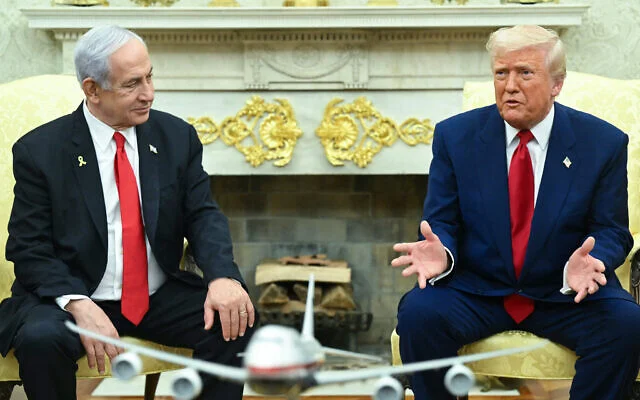
US President Donald Trump said Wednesday that Israel would take a leading role in a potential military strike on Iran along with the US if upcoming nuclear talks don’t succeed.

The remark came two days after Trump appeared to blindside Prime Minister Benjamin Netanyahu by announcing alongside him at the White House that direct US-Iran talks on curbing Tehran’s nuclear program would take place this coming Saturday, a timing that Netanyahu’s cabinet secretary said Wednesday had taken Jerusalem by surprise.

Asked by reporters in the Oval Office on Wednesday whether he would use military means against Iran if the latter doesn’t agree to a nuclear deal, Trump responded: “If it requires military, we’re going to have military.”

“Israel will obviously be very much involved in that — it’ll be the leader of that,” he said, in what appeared to be the first time he’s explicitly threatened an Iranian strike by Israel, let alone one led by the Jewish state.

But he appeared to partially walk back the comment in his next breath. “But nobody leads us. We do what we want to do.”

He said the US would “absolutely” use military force against Iran if necessary, and that he has a timeline for how long the diplomatic effort would last, though he didn’t specify. Reports have said Trump is giving the process two months.

“I can’t really be specific. But when you start talks, you know if they’re going along well or not… The conclusion would be when I think they’re not going along well.”

The US president said that Saturday’s slated summit in Oman was the “start” of a process. His envoy to the Middle East, Steve Witkoff, is slated to represent the US, while Iran will be represented by its Foreign Minister Abbas Araghchi. Trump has said the talks will be direct, while Iran has said they will be through a mediator.

“We have a little time, but we don’t have much time because we’re not going to let them have a nuclear weapon,” Trump said. “We’re going to let them thrive. I want them to thrive. I want Iran to be great. The only thing they can’t have is a nuclear weapon. They understand that. The people are so incredible in Iran. They’re so smart… They’re in a rough situation, rough regime… The leaders understand: I’m not asking for much. They can’t have a nuclear weapon. ”

“I was a little bit surprised because when the election was rigged, I figured that they would get the weapon, because with me, they were broke,” he claimed, citing sanctions..

Witkoff may end up holding off on traveling to Oman on Saturday if Iran refuses to hold direct talks with him in Muscat, The Washington Post reported.

US officials have been insisting that the negotiations will be direct, having argued that indirect talks aren’t as effective.

“We won’t be played for fools,” a Trump administration official was quoted as saying, arguing that what is needed to break through the deep mistrust on both sides is a “full-fledged discussion” and a “meeting of minds.”

Witkoff would even be willing to travel to Tehran if invited, two administration officials told the Post. One of the officials speculated that Trump’s decision to announce the talks alongside Netanyahu in the Oval Office on Monday was to keep the premier in check and preempt Israeli criticism.

Trump is more eager to engage in diplomacy than bombing, the officials told the Post.

Saturday surprise

Meanwhile, Cabinet Secretary Yossi Fuchs acknowledged that Netanyahu was caught off guard by Trump’s announcement of the direct talks this weekend.

Speaking with the Kol Berama radio station, Fuchs insisted that Netanyahu had known in advance about the planned US negotiations with Iran, but “he did not know the talks will take place on Saturday.”

“There is a close connection between the president and the prime minister. The president’s team competes over who loves Israel the most,” said Fuchs.

In a cabinet meeting Wednesday night, Netanyahu reportedly told ministers that Israel had had advance knowledge of the US talks with Iran, with Washington having asked Jerusalem what it would consider to be a good deal.

The Kan public broadcaster cited an Israeli source as saying that Netanyahu answered that a good proposal would be similar to one that led to the dismantlement of Libya’s nuclear program, and added that time for diplomacy was limited.

Netanyahu convened the cabinet to discuss his recent trips to Hungary and the United States, with a focus on the US. The premier called on Monday for the forum to convene, immediately after he finished his meeting with Trump, The Times of Israel has learned.

The Trump meeting contained a series of unwelcome surprises for Netanyahu even beyond the Iran talks, namely on the lack of immediate tariff relief and on tensions over Turkey, with Trump praising its President Recep Tayyip Erdogan, a staunch Israel critic who has close Hamas ties.

Only cabinet ministers were invited to the cabinet meeting. Security chiefs, including Shin Bet chief Ronen Bar as well as the heads of the IDF and the Mossad, were not invited, according to Hebrew media outlets. The Kan public broadcaster cited an unnamed source as asserting this was due to the diplomatic, non-security nature of the meeting.

Netanyahu also met CIA Director John Ratcliffe in Jerusalem on Wednesday, his office said, adding that Mossad chief David Barnea was also present.

Efforts to settle a dispute over Iran’s nuclear program, which it says is purely for civilian use but which Western countries see as a precursor to an atomic bomb, have ebbed and flowed for more than 20 years without resolution.

Trump withdrew from a 2015 deal between Iran and six world powers — the US, Russia, China, France, Britain and Germany — during his first term of office in 2018, and also imposed stiff sanctions. Iran responded by dropping some of its commitments to the deal, known as the Joint Comprehensive Plan of Action.

Iran, which is sworn to Israel’s destruction, denies seeking a nuclear weapon, but it has ramped up its enrichment of uranium to 60 percent purity, which has no application beyond nuclear weapons, and has obstructed international inspectors from checking its nuclear facilities.

International talks to bring both countries back to the deal have stalled.

The US issued fresh sanctions on Iran on Wednesday, with the Treasury Department saying that the measures targeting five Iran-based entities and one person based in Iran were imposed due to their support of Iran’s nuclear program with the aim of denying Tehran a nuclear weapon.

Netanyahu Says Iran Deal Must Include Blowing Up and Dismantling Nuclear Sites

Posted April 14, 2025 by davidking1530
Categories: Uncategorized

Tags: , , , ,

There’s no way any deal including blowing stuff up will be agreed to by the Iranians.

Israeli leader calls for Libya-style disarmament ahead of U.S.-Iran talks in Oman.

10 April 2025

https://israfan.com/p/netanyahu-iran-deal-libya-model

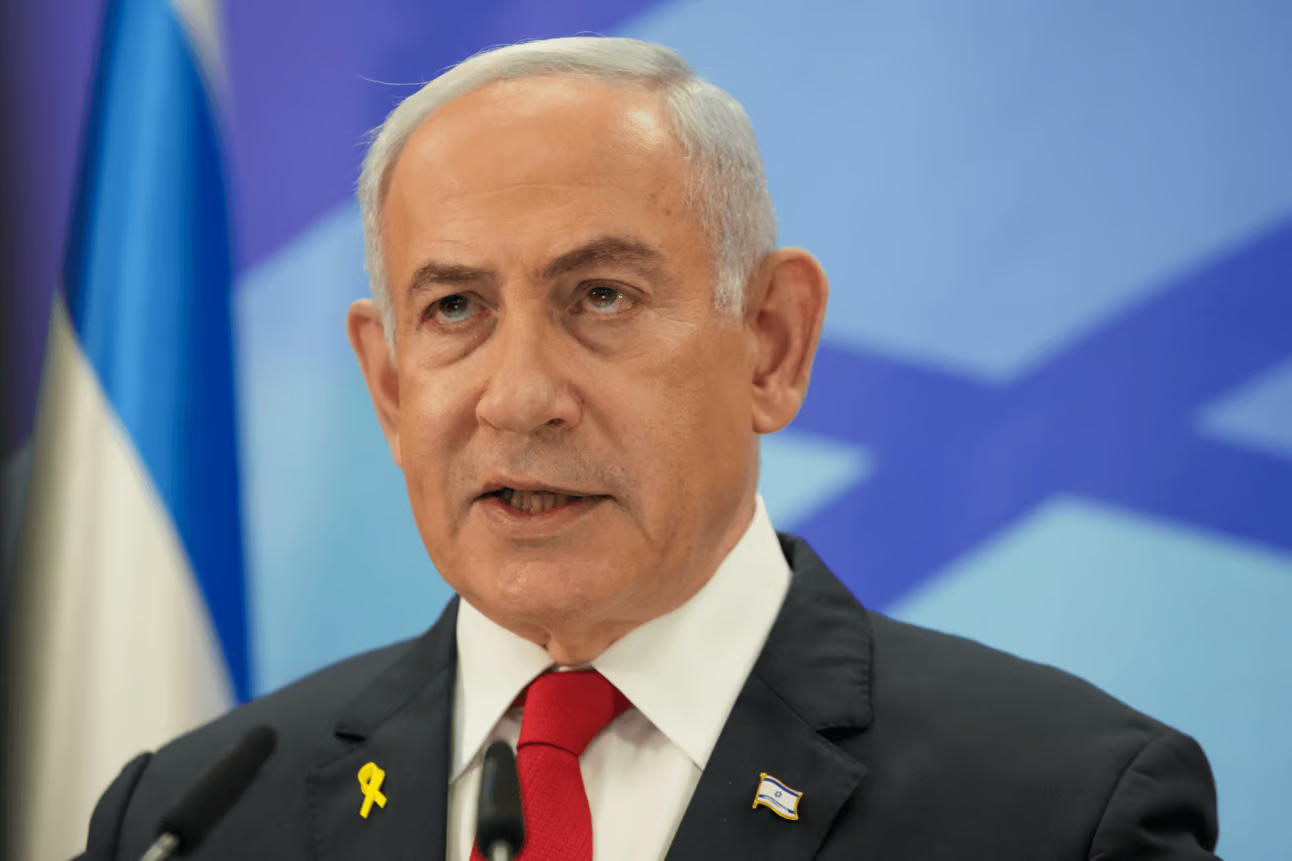
Israeli Prime Minister Benjamin Netanyahu has issued a firm warning regarding any future nuclear agreement with Iran, stating that only a Libya-style disarmament approach would be acceptable. Speaking Tuesday just before departing Washington, Netanyahu emphasized that Iran’s nuclear program must be physically dismantled and destroyed under direct American supervision.

“We agree that Iran will not have nuclear weapons,” Netanyahu declared. “This can be done by agreement, but only if this agreement is Libyan-style: They go in, blow up the installations, dismantle all of the equipment under American supervision and carried out by America this would be good.”

The remarks come ahead of renewed nuclear talks between Iran and the United States, set to begin Saturday in Muscat, Oman. While President Trump described the negotiations as “direct,” Iran insists they will be indirect, facilitated through mediators.

Trump, speaking alongside Netanyahu in the Oval Office on Monday, underscored his administration’s uncompromising stance: “Iran cannot have a nuclear weapon. If it can be done diplomatically in a full way, the way it was done in Libya, I think that would be a good thing.”

Netanyahu also highlighted several other strategic discussions held with Trump, including the ongoing war against Hamas in Gaza. He reiterated Israel’s dual objectives: “We are determined to eliminate Hamas, and at the same time, we are determined to return all of our hostages.”

Addressing critics, Netanyahu said: “The president looked at me and told the journalists who were present ‘This man is working constantly to free the hostages.’ I hope that this shatters the lie… that I don’t care. I do care, and we will be successful.”

Netanyahu also disclosed discussions on the future of the Gaza Strip, revealing that Israel is in dialogue with several countries about accepting Palestinian civilians. “In the end, this is what needs to happen,” he said.

The prime minister voiced concern about Turkey’s intentions to establish military bases in Syria, which he warned would threaten Israel. “We oppose this and are working against it,” he told Trump.

Finally, Netanyahu praised Trump’s economic diplomacy, stating that Israel would work to eliminate its trade deficit with the United States. “This is the little that we can do for the U.S. and its president, who does so much for us.”

Describing the visit as “very warm,” Netanyahu hinted that more developments are forthcoming: “There were additional things that you will hear about later.”

Preparations Underway To Strike Iran

Posted March 27, 2025 by Joseph Wouk
Categories: Uncategorized

Nasrallah’s children say he cried after pager attack and fell into depression

Posted March 7, 2025 by davidking1530
Categories: Uncategorized

Tags: , , , ,

Hahaha!

2 March 2025

In interviews, Zeinab and Mohammed Jawad Nasrallah speak of how Israeli strikes damaged morale in Hezbollah terror group, say father was noticeably ‘no longer with us’

https://www.timesofisrael.com/nasrallahs-children-say-he-cried-after-pager-attack-and-fell-into-depression/

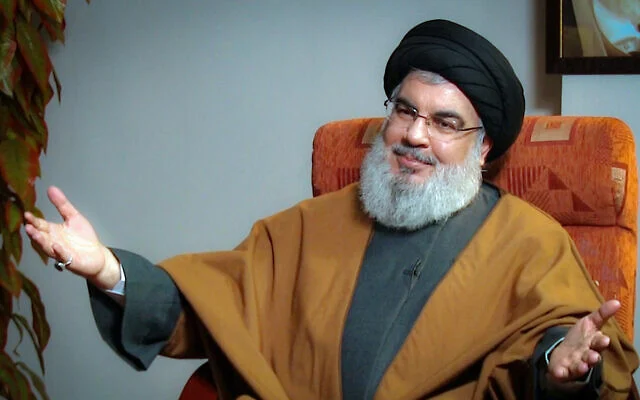
Hezbollah chief Hassan Nasrallah became depressed and was emotionally changed by Israel’s exploding pager attack on his operatives as well as by strikes that decimated the group’s leadership, his family told Lebanese media.

His son said Nasrallah was noticeably no longer the same man, and his daughter revealed that he cried after the beeper attack.

Nasrallah’s son, daughter, and three grandchildren spoke to Al-Manar television for interviews that were broadcast on Friday.

On September 17, 2024, thousands of pagers used by Hezbollah across Lebanon suddenly exploded, killing dozens of operatives and maiming thousands, marking the beginning of Israel’s escalation against the terror group after almost a year of persistent Hezbollah rocket fire that displaced some 60,000 residents of the north, and was met with Israeli airstrikes.

The pagers, laced with explosives, were detonated via an encrypted message that required users to hold the devices with both hands, maximizing the likelihood of the subsequent blast causing debilitating injuries.

Over the next several weeks, Israeli airstrikes pounded Hezbollah, wiping out almost all of its leaders — including Nasrallah himself — and depleting the Iran-backed terror group’s fighting abilities. A ceasefire was eventually reached at the end of November.

Nasrallah’s daughter Zeinab Nasrallah told Al-Manar that she called her mother the day after the beeper explosions to find out how her father had reacted.

“She told me that he cried,” Zeinab Nasrallah said, according to an English translation of her comments on the site.

Son Mohammed Jawad Nasrallah said that his father sank into a serious depression after a July airstrike killed Hezbollah military commander Fuad Shukr in his Beirut apartment, and then the beeper attacks.

Everyone who met him said “he is no longer with us,” Jawad Nasrallah recalled.

In addition, Israel’s relentless bombing campaign, once the conflict escalated into open war, had a profound effect on the Hezbollah leader, and directly impacted the terror group’s morale, Nasrallah said.

He also said that his father was aware of the danger he faced, but apparently had dropped his guard and become less cautious than he had in the past about evading a possible Israeli strike against him.

Ten days after the beeper attack, Israel killed Nasrallah in a massive bombing of his Beirut underground bunker. He had led the terror group for three decades.

Last December, two former Mossad agents spoke to CBS’s 60 Minutes about the beeper operation, with one of them asserting that the veteran Hezbollah leader saw pagers exploding and injuring people who were right next to him in his bunker.

“Nasrallah — when we operated the beeper operation — just next to him in the bunker several people had a beeper receiving the message. And in his own eyes, he saw them collapsing.”

Asked how he knew that, the agent said, “It’s a strong rumor.”

Two days after the attack, Nasrallah gave a speech.

“If you look at his eyes, he was defeated,” the agent said in accented English. “He already lose the war. And his soldier look at him during that speech. And they saw a broken leader.”

Last week, Mossad chief David Barnea described the beeper operation as a “turning point” in the fight in Lebanon.

Nasrallah was buried last week in a Beirut funeral ceremony. As the funeral began at the Camille Chamoun Sports City Stadium, Lebanon’s biggest sports arena, Israeli warplanes flew at low altitude over Beirut.

The beeper attacks, swiftly attributed to Israel, came as Israel began to step up a counteroffensive against Hezbollah, which began striking Israel the day after the allied Palestinian terror group Hamas’s October 7, 2023, attack.

Some 1,200 people in Israel, mostly civilians, were killed in the Hamas onslaught, and 251 were taken hostage, sparking the war in Gaza.

A complex, three-phase ceasefire with Hamas began last month, though its future is unclear, as only the first stage has been completed.

Iran’s uranium stockpile surges, IAEA warns of nuclear weapon threat – The Jerusalem Post

Posted March 3, 2025 by Joseph Wouk
Categories: Uncategorized

Source: Iran’s uranium stockpile surges, IAEA warns of nuclear weapon threat – The Jerusalem Post

ran’s 60% level enriched uranium had increased to 275 kilograms, an increase of approximately one full nuclear weapon’s worth per month since December.
By YONAH JEREMY BOB
MARCH 3, 2025 13:26
Updated: MARCH 3, 2025 13:32
Email Twitter Facebook fb-messenger
Iranian missiles are displayed during the 46th anniversary of the Islamic Revolution in Tehran, Iran, February 10, 2025. (photo credit: MAJID ASGARIPOUR/WANA)
Iranian missiles are displayed during the 46th anniversary of the Islamic Revolution in Tehran, Iran, February 10, 2025.
(photo credit: MAJID ASGARIPOUR/WANA)

IAEA Director-General Rafael Grossi on Monday informed the organization’s Board of Governor’s that Iran’s 60% level enriched uranium had increased to 275 kilograms, an increase of approximately one full nuclear weapon’s worth per month since December.

Further, the IAEA has found that Tehran has enough 60% enriched uranium which could be quickly converted to the 90% weaponized level, to make six nuclear weapons, if it decided to do so.

This is without even taking into account the Islamic Republic’s enriched uranium to 20% and lower levels.

Top Articles

Read More
Biden’s antisemitism envoy rejects Columbia job over campus antisemitism

Israeli and some US estimates are that Iran could potentially develop an even larger number of nuclear weapons than the IAE estimates, especially if they made smaller nuclear bombs.

Iran’s latest spike in uranium enrichment was its response to the IAEA Board condemning it in November 2024 for nuclear violations.

Iranian centrifuges are seen on display during a meeting between Iran’s Supreme Leader Ayatollah Ali Khamenei and nuclear scientists and personnel of the Atomic Energy Organization of Iran (AEOI), in Tehran, Iran June 11, 2023. (credit: Office of the Iranian Supreme Leader/WANA (West Asia News Agency) via REUTERS)Enlrage image
Iranian centrifuges are seen on display during a meeting between Iran’s Supreme Leader Ayatollah Ali Khamenei and nuclear scientists and personnel of the Atomic Energy Organization of Iran (AEOI), in Tehran, Iran June 11, 2023. (credit: Office of the Iranian Supreme Leader/WANA (West Asia News Agency) via REUTERS)
The report also comes as top Iranian officials forced out Vice President Javad Zarif, one of the government’s top advocates for diplomacy with the West.

Iran Supreme Leader Ayatollah Ali Khamenei has so far signaled zero willingness to trust and negotiate with the Trump administration over the nuclear and other issues, given the increased sanctions that the administration has placed on Iran since US President Donald Trump took office on January 20.

Khamenei has said Trump’s pulling out of the nuclear deal between Iran and the West in 2018 disqualifies him from being a trusted negotiating partner, while Trump has said Khamenei has a limited timeline to cut a deal before facing consequences.

Would Trump green light Israel attacking Iran’s nuclear program?
It is unclear whether Trump would green light Israel attacking Iran’s nuclear program in the coming months or whether he would press European countries to invoke the global sanctions snapback mechanism.

Grossi told the Board, “Following my last report, Iran’s stockpile of uranium enriched up to 60% U‑235 has increased to 275 kg, up from 182 kg in the past quarter. Iran is the only non-nuclear weapon State enriching to this level, causing me serious concern.”

Stay updated with the latest news!

Subscribe to The Jerusalem Post Newsletter

Subscribe Now
“It has been four years since Iran stopped implementing its nuclear-related commitments,” under the nuclear deal, said the IAEA chief.

Further, he said Iran’s claim that it has declared all of its nuclear materials “is inconsistent with the Agency’s findings of uranium particles of anthropogenic origin at undeclared locations in Iran. The Agency needs to know the current locations of the nuclear material and/or of contaminated equipment involved.”

“There is also a discrepancy in the material balance of uranium involved in uranium metal production experiments conducted at Jaber Ibn Hayan Multipurpose Laboratory, for which Iran has not accounted,” he warned.

In addition, he stated, “I deeply regret that Iran, despite having indicated a willingness to consider accepting the designation of four additional experienced Agency inspectors, did not accept their designation.”

Moreover, he said that he will “produce a comprehensive and updated assessment on the presence and use of undeclared nuclear material in connection with past and present outstanding issues regarding Iran’s nuclear program,” as instructed by the Board in November, but did not give a deadline for filing the report.

Finally, he added, “My visit to Tehran last November, and meetings with President Masoud Pezeshkian and Foreign Minister Abbas Araghchi indicate that there may be room for constructive compromises. I hope to see them again soon and pursue effective dialogue and tangible results,” though he cautioned that so far there has been no progress.

BREAKING: Iran PANICS Fearing Immediate Israel-US Attack On Nuclear Facilities | TBN Israel – YouTube

Posted February 27, 2025 by Joseph Wouk
Categories: Uncategorized

Israel sees opening for strikes on Iranian nuclear sites: US intelligence

Posted February 25, 2025 by davidking1530
Categories: Uncategorized

Tags: , , , ,

13 February 2025

https://www.theaustralian.com.au/business/the-wall-street-journal/israel-sees-opening-for-strikes-on-iranian-nuclear-sites-us-intelligence/news-story/0beab805f30db7e9ee8d528831523bfe

US intelligence agencies concluded during the final days of the Biden administration that Israel is considering significant strikes on Iranian nuclear sites this year, aiming to take advantage of Iran’s weakness, officials familiar with the report said.

The finding was included in an analytical assessment produced around the new year as the Biden administration wound down. The analysis highlighted the risks of further high-stakes military activity in the Middle East after the degradation of Iran’s capabilities over the past year.

The intelligence analysis concluded Israel would push the Trump administration to back the strikes, viewing him as more likely to join an attack than now-former President Joe Biden and fearing the window for halting Tehran’s pursuit of a nuclear weapon was closing, two of the people familiar with the intelligence said.

The US intelligence community produced a second report delivered during the early days of President Trump’s administration reiterating that Israel is considering such strikes on Iranian nuclear facilities, according to one of the US officials familiar with the intelligence.

US military support and munitions would likely be needed for an Israeli attack on Iran’s heavily fortified nuclear sites given their complexity, US military officials say.

Israeli Prime Minister Benjamin Netanyahu’s office didn’t respond to requests for comment, and Israel’s military declined to comment. Israeli officials have repeatedly signalled that there is an opportunity for more aggressive action against Iran.

“Iran is more exposed than ever to strikes on its nuclear facilities,” Israeli Defense Minister Israel Katz said in November. “We have the opportunity to achieve our most important goal – to thwart and eliminate the existential threat to the State of Israel.” Iran in the past has threatened a massive retaliation if its nuclear sites were hit, but Tehran is now significantly weakened after Israel’s strikes last year on its conventional military sites, and the heavy losses suffered by its regional proxies, including Hezbollah and Hamas.

During the presidential transition, some members of Trump’s team considered the viability of Israel launching preventive strikes on Iranian nuclear sites, including having US forces join Israeli aircraft in a bombing campaign. Now as president, Trump has said he prefers a negotiated solution.

Trump last week signed a national-security memorandum to reimpose his policy of “maximum pressure” on Iran and didn’t rule out supporting Israeli strikes if his desired negotiations to end Iran’s nuclear work fail.

“Reports that the United States, working in conjunction with Israel, is going to blow Iran into smithereens, ARE GREATLY EXAGGERATED,” he wrote last week on Truth Social.

A spokeswoman for the Office of the Directorate of National Intelligence declined to comment. A spokesman for the National Security Council said the administration doesn’t comment on intelligence matters.

Tehran has been signalling that it is open to talks with the US “If the main obstacle for the US is Iran pursuing nuclear weapons, then that can be resolved,” its foreign minister told state television last week. “Iran’s stance on nuclear weapons is clear.”

In December, the US intelligence community issued its sharpest warning yet that Iran could move to develop nuclear weapons. Iran has amassed a large stockpile of highly enriched uranium and is thought to have been working on the technical details of completing work on a bomb should it make the political decision to go ahead.

Iran has long forsworn development of a nuclear weapon, but the December report concluded the risks have increased that it could change its mind to develop an effective deterrent, pointing to a public debate in the country over going nuclear. Israel over the past year wiped out the top leadership and much of the arsenal amassed by Lebanese militia Hezbollah, an Iran ally and a deterrent to Israeli attacks, and crippled Iran’s air defences.

The fall of the Assad regime in Syria also deprived Iran of one of its most important allies and a crucial platform for projecting power in the region. Meanwhile, Iranian missile strikes against Israel in retaliation for Israeli attacks have failed to do much damage.

Iran’s leaders are also struggling with an economic crisis brought on by bad management, corruption and heavy sanctions, leaving the country in a weakened state as international pressure builds.

The Biden administration successfully urged Israeli leaders to avoid strikes on Iran’s major nuclear facilities last year when Israel retaliated for an Iranian missile and drone strike. The Israeli attacks instead hit Iran’s air defences and missile-production facilities, diminishing the country’s overall military infrastructure.

The timing and nature of any Israeli strikes on Iran would likely be subject to negotiations between the US and Israel and influenced by other factors, including the fate of fragile ceasefires in Gaza and Lebanon.

Any Israeli attack on Iran’s nuclear facilities would need to hit multiple sites, some in underground fortifications, and be thorough enough that Iran couldn’t quickly rebuild what was destroyed, Israeli analysts said.

Israel would be better served by a new deal in which Iran agrees to dismantle its nuclear program, said Yakov Amidror, a former Israeli national-security adviser under Netanyahu.

“If a good agreement cannot be achieved, Israel will have to act against the nuclear project of Iran” he said.

The Middle East has been struggling with several crises over the past year and a half, including wars in Gaza and Lebanon, the collapse of the Assad family’s half-century dictatorship in Syria, and direct attacks between Iran and Israel. Biden worked to contain the fighting, but Iran and the US were drawn deeper into the conflicts.

Trump’s intervention helped achieve a ceasefire deal in Gaza in January after a year of fruitless efforts. He has also pushed for a normalisation of relations between Saudi Arabia and Israel.

The president roiled the Middle East and Western policy establishments last week by saying the US would take control of Gaza, redevelop the enclave and empty it of Palestinians.

Avner Golov, a former senior director at Israel’s National Security Council and now vice president of MIND Israel, a security-focused non-profit based in Tel Aviv, said while Netanyahu’s priority is the Iranian nuclear issue, Trump seems more interested in ending the war in Gaza and moving toward regional peace deals.

“At the end of the day,” Golov said of Trump’s priorities, “it’s Saudi first with all the deals around it, then Iran.”

Benjamin Netanyahu and Marco Rubio affirm plans on Iran, Gaza – Israel News – The Jerusalem Post

Posted February 16, 2025 by Joseph Wouk
Categories: Uncategorized

Source: Benjamin Netanyahu and Marco Rubio affirm plans on Iran, Gaza – Israel News – The Jerusalem Post

Thanking Rubio for “unequivocal backing” for Israel’s policy in Gaza, Netanyahu said Israel and the United States, under President Donald Trump, shared a common strategy in Gaza.

 US Secretary of State Marco Rubio and Israeli Prime Minister Benjamin Netanyahu shake hands as they make joint statements to the press at the Prime Minister's office in Jerusalem, January 16, 2025. (photo credit: REUTERS/EVELYN HOCKSTEIN)
US Secretary of State Marco Rubio and Israeli Prime Minister Benjamin Netanyahu shake hands as they make joint statements to the press at the Prime Minister’s office in Jerusalem, January 16, 2025.
(photo credit: REUTERS/EVELYN HOCKSTEIN)
Israel and the United States are working in full cooperation on Gaza, Prime Minister Benjamin Netanyahu said on Sunday after a meeting with US Secretary of State Marco Rubio that also covered Iran and the Lebanon ceasefire.

Thanking Rubio for “unequivocal backing” for Israel’s policy in Gaza, Netanyahu said Israel and the United States, under President Donald Trump, shared a common strategy in Gaza, where a fragile ceasefire is in effect between Israel and Hamas terrorists after 15 months of war.

“I want to assure everyone who’s now listening to us that President Trump and I are working in full cooperation and coordination between us,” he said.

Top Articles

Read MoreFrom Cairo’s dungeons to global advocacy: The remarkable journey of Majed El-Shafie

Rubio said that he agreed with Israeli PM Benjamin Netanyahu that Iran was the “single greatest source of instability of the region.”

In a press conference in Israel, Rubio said that there can not “be a nuclear Iran.”

 US Secretary of State Marco Rubio and Israeli Prime Minister Benjamin Netanyahu shake hands as they make joint statements to the press at the Prime Minister's office in Jerusalem, January 16, 2025. (credit: REUTERS/EVELYN HOCKSTEIN)Enlrage image
US Secretary of State Marco Rubio and Israeli Prime Minister Benjamin Netanyahu shake hands as they make joint statements to the press at the Prime Minister’s office in Jerusalem, January 16, 2025. (credit: REUTERS/EVELYN HOCKSTEIN)

Rubio’s trip to Israel, Middle East

Rubio arrived in Tel Aviv late on Saturday on his first visit to the Middle East.

The secretary landed in Israel as top US and Israeli officials worked to secure the release of the remaining six living hostages in phase one of the ceasefire deal.

Rubio’s visit to the Middle East has been in the works for at least a month. The State Department said he would go to the Munich Security Conference, then Israel, the United Arab Emirates, Qatar, and Saudi Arabia from February 13-18.

Before the Saturday release of former hostages Alexander Sasha Troufanov, Sagui Dekel Chen, and Iair Horn, Trump said that if the hostages weren’t returned by 12 p.m. Saturday EST, 7 p.m. Israel Standard Time, then the US would “back” whatever decision Prime Minister Benjamin Netanyahu made.

Amichai Stein contributed to this report.